
Hydrogen Storage and fuel cell technologies
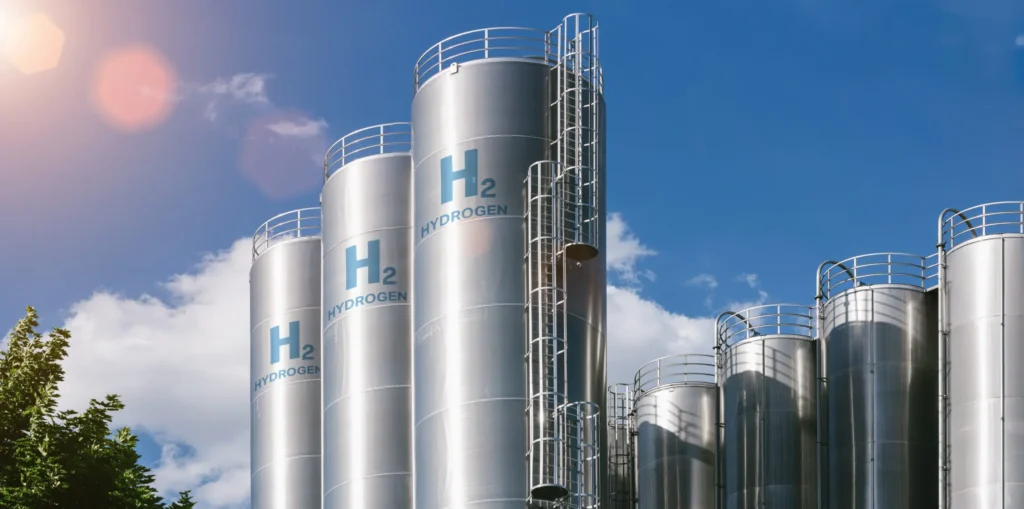
📘 Technology description
Hydrogen storage involves converting electricity into hydrogen (via electrolysis), which can be:
– Stored as compressed, liquefied, or chemically bound hydrogen (e.g., in ammonia or LOHC).
– Converted back into electricity using fuel cells or gas engines.
This technology allows for long-term energy storage — from days to months.
✅ Advantages
– Long-term storage capability – ideal for seasonal balancing (e.g., excess renewable energy).
– Can be transported and stored in various locations.
– Hydrogen can also be used in transport, industry, and heating.
– Zero CO₂ emissions when using green hydrogen (from renewable sources).
– High energy density per unit mass.
⚠️ Limitations
– Low round-trip efficiency (“power-to-hydrogen-to-power”) (30–45%).
– High capital costs (electrolyzers, compressors, storage units).
– Safety requirements – hydrogen is flammable and diffusive.
– Limited transport and distribution infrastructure.
– Efficiency depends on hydrogen purity and fuel cell quality.
🏭 Applications
– Long-term renewable energy storage (seasonal balancing).
– Industrial plants – integration with hydrogen-demanding processes (e.g., chemistry, metallurgy).
– Zero-emission transport – buses, trains, trucks powered by fuel cells.
– District heating and microgrids – local cogeneration systems using fuel cells.